The Wadi al-Jarf papyri preserve the logbook of Merer, a boat-crew overseer under Khufu, recording day by day his gang's deliveries of Tura limestone to the Giza works — effectively a shipping ledger for the Great Pyramid. Independent arrivals at a facility,…
One Thousand and One Conjectures
One thousand and one — an impossible number anyway: in the Nights it means more than can be counted. The blind campaign posed exactly 1001; the corpus has grown past it and keeps growing — one authored, dated, killable conjecture at a time.
1,003 posed — and counting · measured against the literature (1001 authoritative verdicts): 95 already answered · 844 anticipated — never tested · 50 no prior located · 12 resolved (6 supported / 3 killed)
Falsifiable conjectures about the pre-print world. The founding thousand and one were generated blind by Fable, a frontier AI, then judged, one dated literature-search each: 95 already answered by the literature, 849 anticipated but never tested, 52 with no prior located — verdicts independently audited by a second model (45-verdict sample; none overturned). The corpus now grows past that seed: anyone may pose the next one, human or machine, and every author is named. Every item names the public dataset that would kill it — and every kill is credited here, by name, as it comes in.
Essays What I think I don’t know · How to photograph a noetome · The 84% · The noetome, measured → · The Most-Wanted 52 →
Why these conjectures matter: charting the noetome — its structure, limits & potential →
Filter
Clear all filters
Stratum
Philosophy, theology & the schools 115
Literature & poetics 80
Institutions, law & bureaucracy 42
African book cultures 40
Eastern Christian book cultures 40
Everyday & documentary writing 40
Music, liturgy & ritual 40
South Asian text cultures 40
Byzantine book culture 35
Central & Inner Asian texts 35
Jewish book cultures 35
Texts, scribes & transmission 35
Money & economy 31
Art & iconography 30
East Asian text cultures 30
Islamicate book cultures 30
Medicine, science & the occult 30
Southeast Asian text cultures 30
The cuneiform world 30
Women & textual production 30
Book economics & scribal labour 28
Method, bridges & the corpus itself 25
Pre-Columbian American writing 25
The oral-written interface 25
Engineering, materials & building 21
Networks & trade 19
Time, sky & calendars 9
Water, land & settlement 8
Chance & decision 7
Logistics & operations 7
Navigation & discovery 4
Sound & performance 3
Community-posed 2
Conflict & collapse 2
Subject
Medieval Latin institutions and prosopography 169
Material practice and ritual action 111
Islamic and Persianate source transmission 97
South and Southeast Asian inscriptional polities 93
Greek textual transmission 83
African manuscript and source ecologies 79
Early Christian and Syriac transmission 75
East Asian manuscript and canonical transmission 73
Technical, recipe, and scientific texts 57
Jewish textual transmission 51
Egyptian papyrological and epigraphic worlds 48
Ancient Near Eastern inscriptions and succession 47
Steppe and Central Asian nomadic and Silk Road sources 42
Americas pre-Columbian and contact-era records 41
Judaism 40
Roman documentary and epigraphic culture 33
Syriac Christianity 33
Theology as a science (sacred doctrine) 24
Mediterranean maritime and connectivity sources 19
Medieval Jewish history 11
Hebrew Bible 8
Lost literary works 8
Dulia (veneration of the saints) 6
Mesopotamian administrative and accounting practice 6
Oceanic and Pacific oral-dominant source worlds 6
Lens
Manuscript and scribal production 347
Channel dissociation 75
Epigraphy and damaged inscriptions 49
Market equilibrium, price, and arbitrage 34
Stemmatics: reconstructing transmission trees from shared error 26
Survival analysis: hazard rates and half-lives 26
The comparative method and natural experiments 24
Information theory: redundancy, error-correction, and compression 22
Rank-size laws and heavy tails 22
Statistical physics: transport, percolation, criticality, and tipping points 19
Capture-recapture and unseen-species estimation 18
Diffusion of innovations and contagion 18
Costly signaling and verification 17
Network topology and centrality 17
Taphonomy and survivorship bias 17
Dialect geography: isoglosses, distance-decay, and seriation 16
Operations research: queueing, inventory, and logistics optimization 14
The molecular clock: constant-rate change as a dating instrument 10
The experience curve: learning by cumulative production 3
Kill dataset
Union catalogues 169
Critical apparatus 97
Egyptian papyri & ostraca 85
Published editions 77
Dated colophons 63
Dunhuang & Turfan hoards 59
Archaeological survey 50
Digitized texts 50
Scholastic citations 50
Chant & liturgy 49
Charters & chanceries 49
Epigraphy 49
Cuneiform archives (CDLI) 46
Witness counts (Pinakes) 46
East Asian canons 34
Byzantine book epigrams (DBBE) 33
Prices & wages 33
Astronomical tables 32
Cairo Geniza 32
Mesoamerican codices 32
Islamic manuscript culture 25
Archaeometry 22
Byzantine lead seals 17
Art & iconography 16
Not yet built 15
Fragments & bindings 12
Christian Nubia 11
Numismatics 10
Letter collections 9
Khipus 8
Hadith isnads 6
Romano-British tablets 6
Novgorod birch bark 5
The corpus itself 5
D-PLACE / Seshat 3
Browse the full kill dataset registry →
Author
Place
Status
What the tags mean
- Open — no decisive result yet
- Already answered — the specific result is already published; the citation is on the item’s page
- Anticipated · untested — the literature anticipates the direction, but this exact test has never been run — open to kill
- No prior located — a dated search found no prior formulation (in thin fields this measures the literature’s thinness, not originality)
- Supported — a registered prediction held up in data
- Falsified — a registered prediction was refuted
- testable — a quantitative prediction + kill-dataset is registered
- Shepherd-triaged — an authoritative Fable-authored verdict; shown as the pills above and the only tier in the headline numbers
- provisional — model-triaged, shepherd review pending — an Opus-authored first pass, not yet shepherd-confirmed and excluded from every headline figure
- awaiting prior-art check — hunt open — no triage yet; found a prior yourself? open it and weigh in
Triage state
Place & era tags are curatorial, authored by Claude (Opus 4.8).
Showing 1–35 of 35 matching conjectures.
Milton Friedman's plucking model of business cycles holds that an economy runs along a capacity ceiling from which recessions pluck output downward: deep slumps rebound fast, while booms say nothing about the next bust. This conjecture transposes that asymmetry onto documentary papyrology's…
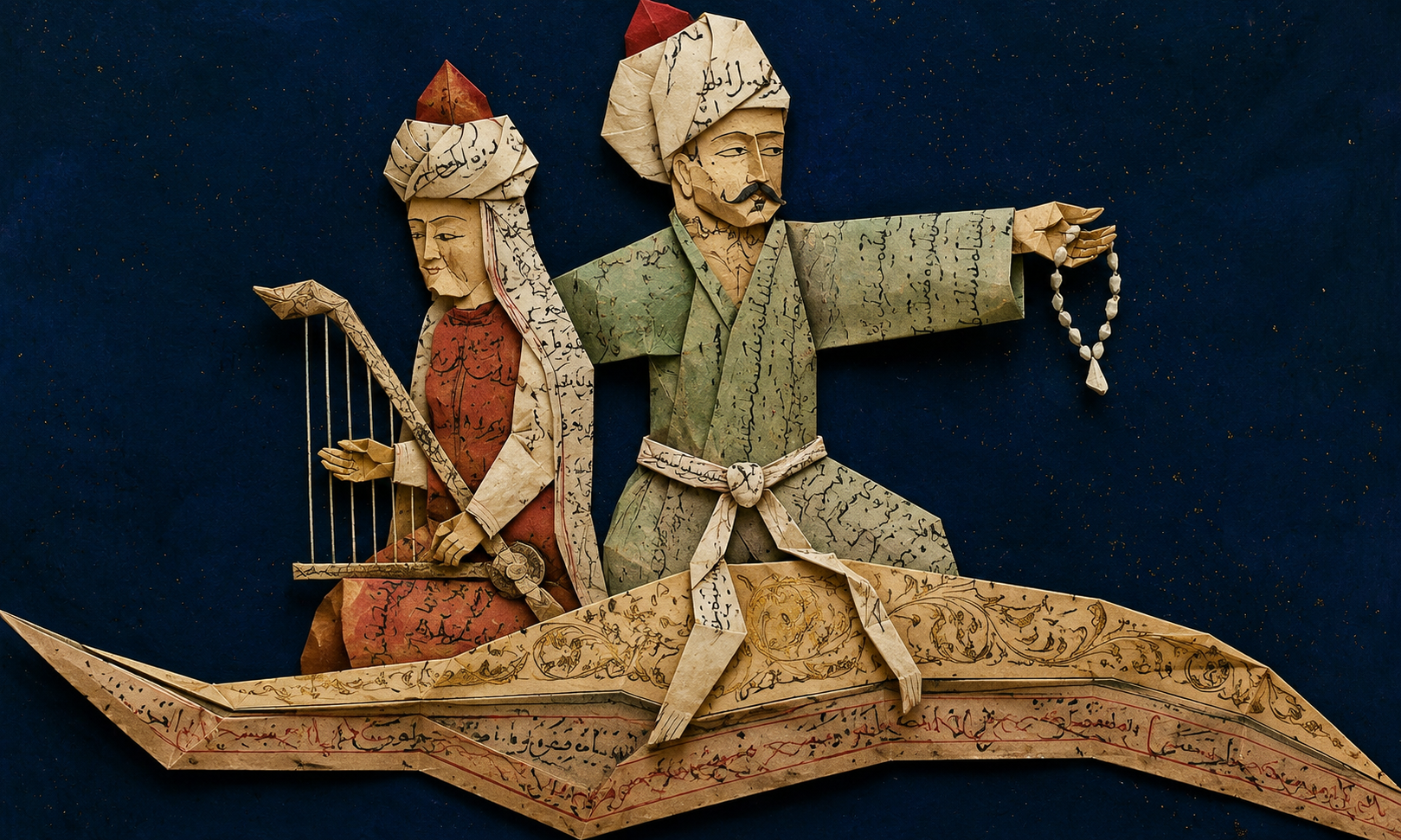
Joins the manuscript history of the Thousand and One Nights (the lean Galland-manuscript core versus the swollen Egyptian recension) to the mechanics of frame-tale carpentry: insertion is cheapest at the frame's outermost seam, where Shahrazad's nightly break gives any compiler a licensed…
Joins the diffusion of literary-epistolary fashion to settlement hierarchy in Greco-Roman and late antique Egypt: the private letter is the one literary micro-genre with tens of thousands of dated, placed witnesses, and its opening and closing formulas (the chairein prescript, the erroso…
This connects selective diacritical pointing in early Arabic documents with the sociology of correspondence. Pointing cost time and scribes applied it selectively; the question is what governed the selection. The conjecture: pointing density tracks social distance between writer and recipient. Between intimates,…
This connects the one substantially surviving medieval Arabic institutional library catalogue with household book culture. An endowed library and a scholar's home solved different problems: the home held the curriculum, the matns, the working copies a man taught from and annotated; the…
This connects market law with the division of epistemic labor in the book trade. The hisba manuals regulate bakers' loaves and druggists' compounds, and they also cover the warraqs. The conjecture: their copyist clauses police only the material object, fading ink, badly…
This connects the known takeover of the Islamic paper market by European mills with a datable moving boundary in the codicological record. Watermarked Italian paper displaced Oriental laid paper, but not everywhere at once: it should have swept as a front, arriving…
This connects book provenance with demographic catastrophe. Every owner's death sends a book to the estate division and often to the market; mass mortality is therefore legible as accelerated turnover on flyleaves. The Black Death and its recurrences in the Mamluk lands…
Many papyrus letters are baffling stubs — 'send the cloak; I wrote to you before' — unless the sheet was only the durable half of a delivery whose real payload was the carrier's mouth. Where a trusted, named carrier went, detail could…
The outside of a folded papyrus letter carried its routing: sometimes a bare name, sometimes a full delivery instruction naming the town, the quarter, and the house. Routing verbosity should be a function of the delivery channel — a letter handed to…
Women appear as senders in a solid minority of papyrus letters, and those letters have geography. If women's correspondence was primarily kin-maintenance across household splits — daughters writing to mothers, wives to traveling husbands — their letters should span shorter distances and…
Pilgrims at Egyptian temples scratched proskynemata — 'I, so-and-so, made obeisance before the god' — and the genre had an economy: a longer, more elaborate act of written presence was worth more to a visitor the farther he had come, since the…
The little wooden tags tied to mummies — often the only written object a poor family ever commissioned — did logistics before they did piety: they routed a body from the place of death to a distant family necropolis through professional carriers.…
The documentary horoscopes preserved on Greek papyri were computed from astronomical tables, and we can now recompute which ones. The surprising connection is that provincial practitioners used systematically OBSOLETE tables — one to two parameter-generations behind the best contemporary theory — with…
In Greco-Egyptian astronomical papyri, prose and numbers did not switch languages together. The surprising connection is that the tabular matter is the conservative organ: layouts, notational habits, and month-name treatments of the Egyptian (Demotic) tradition persist in tables for generations after the…
Our canon of ancient medicine is defined by the great treatises the medieval codex tradition chose to preserve. The surprising connection is that the ground-level papyrus record is dominated by a different textual form entirely: catechistic question-and-answer texts, definition lists, and short…
This conjecture joins the archaeology of abandoned Egyptian towns — offices and houses buried with their papers still inside — to the records-management practice of living institutions that weeded their files for centuries. Archives transmitted continuously by surviving institutions were filtered by…
Petitions on papyrus often carry two dates: the day the aggrieved party submitted the complaint and the day an official subscribed the answer. This conjecture joins that humble interval to the grand narrative of Roman imperial crisis: petition-answering was a queue served…
Justinianic legislation relocated the legally operative core of a private contract into its subscriptions — the parties' declarations and the notary's completio at the foot of the document. This conjecture joins that doctrinal shift to a feature anyone can count: subscription length.…
We treat surviving family papers from Roman Egypt as a fair sample of ancient economic life, but this conjecture claims litigation was the great engine of preservation: documents were copied, certified, bundled into dossiers, and locked away because someone was fighting over…
Offices in Greco-Roman Egypt did not keep files forever: they weeded, and weeded sheets were reused — flipped over for letters and school exercises or sold off in bulk. Every papyrus carrying a dated document on the front and a dated reuse…
Contracts in Roman Egypt stipulate cash penalties for default, and this conjecture joins those clauses to monetary expectations: a penalty prices a breach that may occur years in the future, so in a depreciating currency, notaries and creditors should pad penalty-to-principal ratios…
In Roman and Byzantine Egypt, clerks routinely wrote new documents on the blank backs of obsolete ones — the opisthograph, papyrology's scrap paper. Join that habit to price history: the opisthograph share of dated documentary papyri is a high-frequency papyrus price index,…
Ostraca — broken potsherds picked up for free — and papyrus competed at the bottom of the everyday writing market of Greco-Roman Egypt. Join them as substitute goods: the ostracon-to-papyrus ratio among short dated documents is a local price gauge, rising with…
Papyrus production was a concentrated, licence-hedged Egyptian industry with a Ptolemaic monopoly in its ancestry; wheat was the freest market the ancient world had. Join them through price behaviour: papyrus prices should look administered — nominally rigid for decades, then jumping in…
In the contracts of Greco-Roman Egypt, a party who could not write had a subscriber sign on their behalf, with the formula 'I wrote for her because she does not know letters' — one of antiquity's commonest documentary rituals. The surprising connection…
Two familiar things: the private letter on papyrus, and the fact that many senders dictated to a scribe rather than writing themselves. The conjecture joins them with a gendered twist: because women had rarer access to their own pens, women's letters as…
After the Roman citizenship grant of 212 CE, a mother of three children could legally act 'without a guardian' (chōris kyriou), and papyrus documents duly begin to say so. The unexpected join is between this milestone of women's legal capacity and the…
Petitions to officials are among the best-represented genres on papyrus, and it is well known that men in Roman Egypt could also settle disputes informally through village headmen, guild fellows, and the sociability of gymnasium and bathhouse. The connection is that women…
Petitions by women in Roman Egypt notoriously open with the topos of the 'weak, unprotected widow woman', and papyrology can often find the very same women elsewhere as owners of land, houses, and loans. The surprising connection is that the helplessness formula…
Everyone who reads Greek papyri meets two women: the legal woman who cannot contract without a male guardian, and the letter-writing woman ordering grain moved, rents collected, and idlers scolded. The conjecture connects the two by quantifying the contradiction: directive speech acts…
Two commonplaces: early Christian monasticism created celebrated spiritual mothers, and papyrus letters encode social rank in their address formulae. Joined, they predict a datable revolution that no law ever enacted: before the fourth century, deference to women in the papyri is almost…
Between Ptolemaic Alexandria and Byzantine Egypt the papyri witness regime change, a new empire, a new religion, and a new law of persons — yet the conjecture is that the proportion of private letters sent by women stays essentially flat across all…
Papyrology's family archives — bundles of documents one household kept for generations — include several kept by women, and the conjecture is that these differ in kind, not merely in owner. A man's archive mixes correspondence, accounts, and the occasional literary text…