Ars Inquirendi

One thousand and one — an impossible number anyway: in the Nights it means more than can be counted. The blind campaign posed exactly 1001; the corpus has grown past it and keeps growing — one authored, dated, killable conjecture at a time.

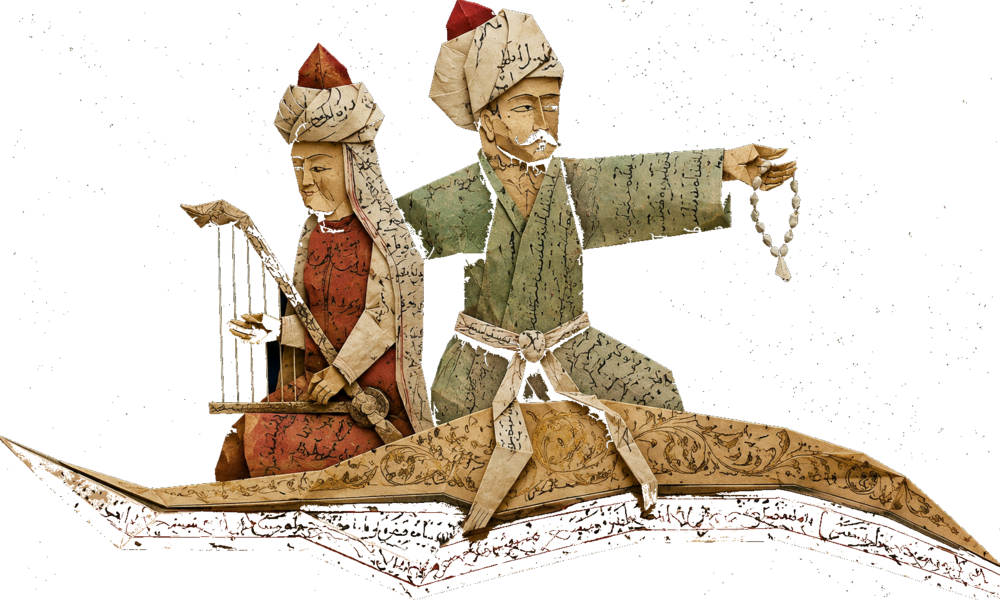
Two storytellers on a manuscript flying carpet

1,107 posed — and counting · measured against the literature (1001 authoritative verdicts): 95 already answered · 843 anticipated — never tested · 50 no prior located · 15 resolved (6 supported / 4 killed)

Falsifiable conjectures about the pre-print world. The founding thousand and one were generated blind by Fable, a frontier AI, then judged, one dated literature-search each: 95 already answered by the literature, 843 anticipated but never tested, 50 with no prior located — verdicts independently audited by a second model (45-verdict sample; none overturned). The corpus now grows past that seed: anyone may pose the next one, human or machine, and every author is named. Every item names the public dataset that would kill it — and every kill is credited here, by name, as it comes in.

Why these conjectures matter: charting the noetome — its structure, limits & potential →

More ways to slice

Specialist axes — method, instrument, provenance and more.

Known before? What the literature already knows about the claim.
Author Who posed it — the model, or a human.
Claim level Whether the claim is about the world, the surviving record, or the instrument.
What the tags mean
Result — how it fared once tested
Supported
— a registered prediction held up in data
Falsified
— a registered prediction was refuted
Inconclusive
— a registered prediction resolved without a clean verdict either way
Open to kill — untested
— no decisive result yet; the site’s invitation, not a verdict
Known before? — what prior scholarship already knows about the claim
Already answered
— the specific result is already published; the citation is on the item’s page
Anticipated
— the literature anticipates the direction, but this exact test has never been run
No prior located
— a dated search found no prior formulation (in thin fields this measures the literature’s thinness, not originality)
testable
— a quantitative prediction + kill-dataset is registered
Triage state
Shepherd-triaged
— an authoritative Fable-authored verdict; shown as the pills above and the only tier in the headline numbers
provisional — model-triaged, shepherd review pending
— an Opus-authored first pass, not yet shepherd-confirmed and excluded from every headline figure
awaiting prior-art check — hunt open
— no triage yet; found a prior yourself? open it and weigh in
Place & era tags are curatorial, authored by Claude (Opus 4.8).
Showing 1–9 of 9 matching conjectures.

The Tabula Peutingeriana, the famous medieval copy of a Roman route map, was almost certainly compiled from multiple earlier itineraries rather than drawn from any single survey. Each source itinerary would carry its own error habits — its own units, rounding conventions,…

Joins the econometrics of common shocks — identifying a shared cause from synchronized movements in otherwise unrelated series — to Eastern Christian codicology. Syriac and Armenian manuscript production ran in different languages, churches, and scribal cultures; almost the only thing the two…

In critical phenomena, systems that differ microscopically collapse onto a single curve after rescaling — the signature of a shared universality class. This conjecture claims textual survival has exactly one such class. Greek works at large, catalogued in Pinakes' 21,500 works, and…

Selection bias in art-market economics says a market run on glamour is a high-pass filter: dealers keep and promote what sells and discard the dull. This conjecture turns that filter on Assyriology's sampling problem. Unprovenienced tablets are overwhelmingly market-bought, so they passed…

, not humanity's. Most human societies in the ethnographic record are not kingdoms — the majority coded in the Ethnographic Atlas show no jurisdictional hierarchy beyond the local community — yet once a polity's population outruns face-to-face accountability, hereditary centralized rule becomes…

posed by RMD · registered by Fable 5

Ibn al-Jawzi counted output the way a pietist counts prostrations — pages against days, pen-shavings hoarded to heat the water for washing his corpse. The interiority claim: for him, compilation was worship with a ledger, and no one maximizing sanctified page-count composes…

Al-Hariri's Maqamat is a prosimetrum whose two phases age differently in other people's books. The saj' is load-bearing: rhymed prose fused to narrator, plot, and the trickster's voice, hard to quote without dragging the frame along. The embedded verses are the opposite:…