Nicholas of Lynn
The moon, the hours and the tides
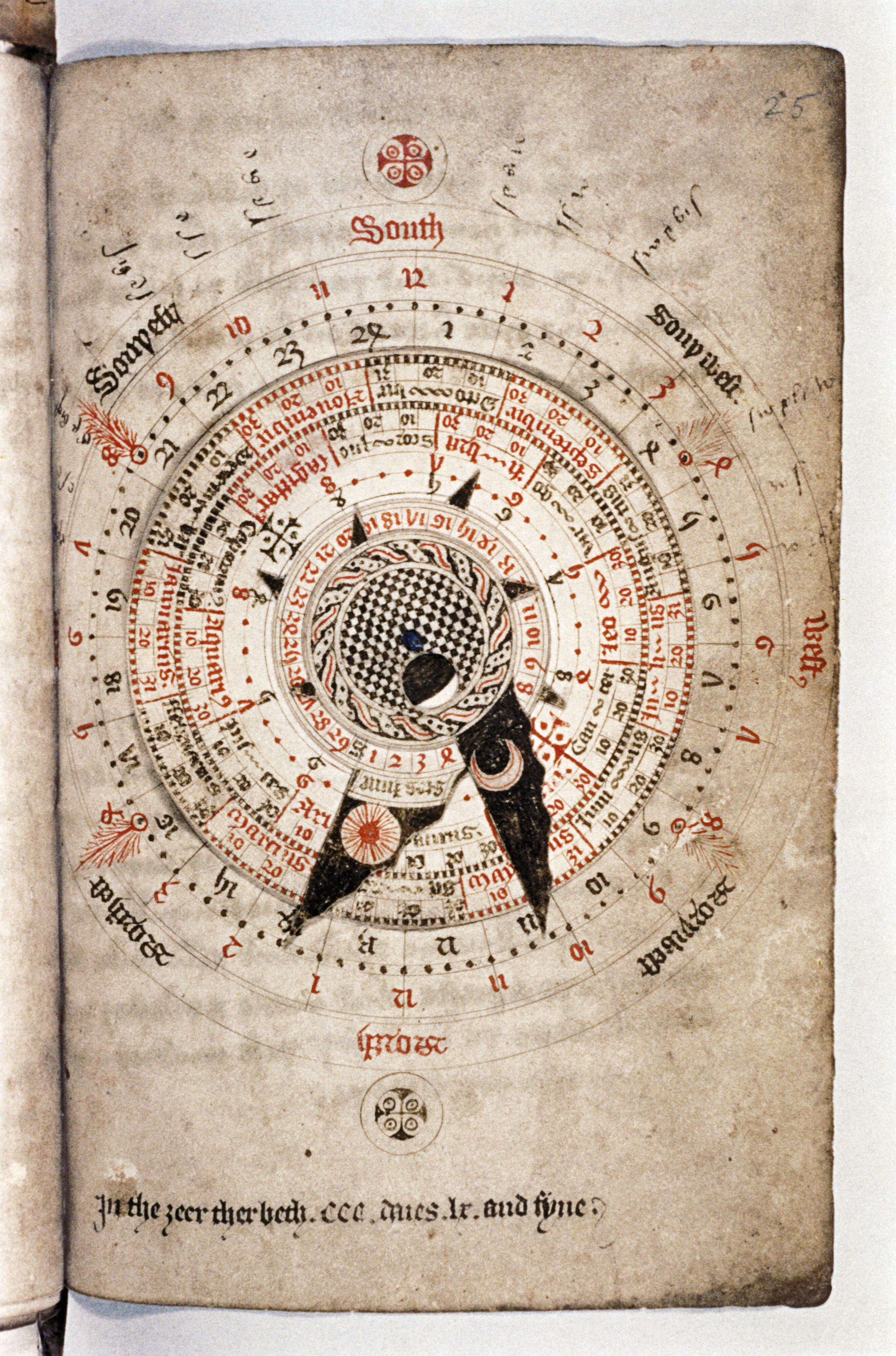
Nicholas of Lynn, a Carmelite friar at Oxford, compiled his Kalendarium in 1386 for the years 1387 to 1462: tables of the sun and the moon, of eclipses and of the tides, with the instruments for using them. Chaucer names him in the Treatise on the Astrolabe. This is the volvelle from a fifteenth-century copy, Bodleian Library MS. Ashmole 370, folio 25r, in the Bodleian's own photograph, made to turn. Two discs turn on the pin, as on the parchment: the sun disc, which carries the sun's pointer and the ring of the moon's age, and on top of it the moon disc, which carries the moon's pointer and the aperture that shows the moon's phase. Everything else is the photograph as it is.
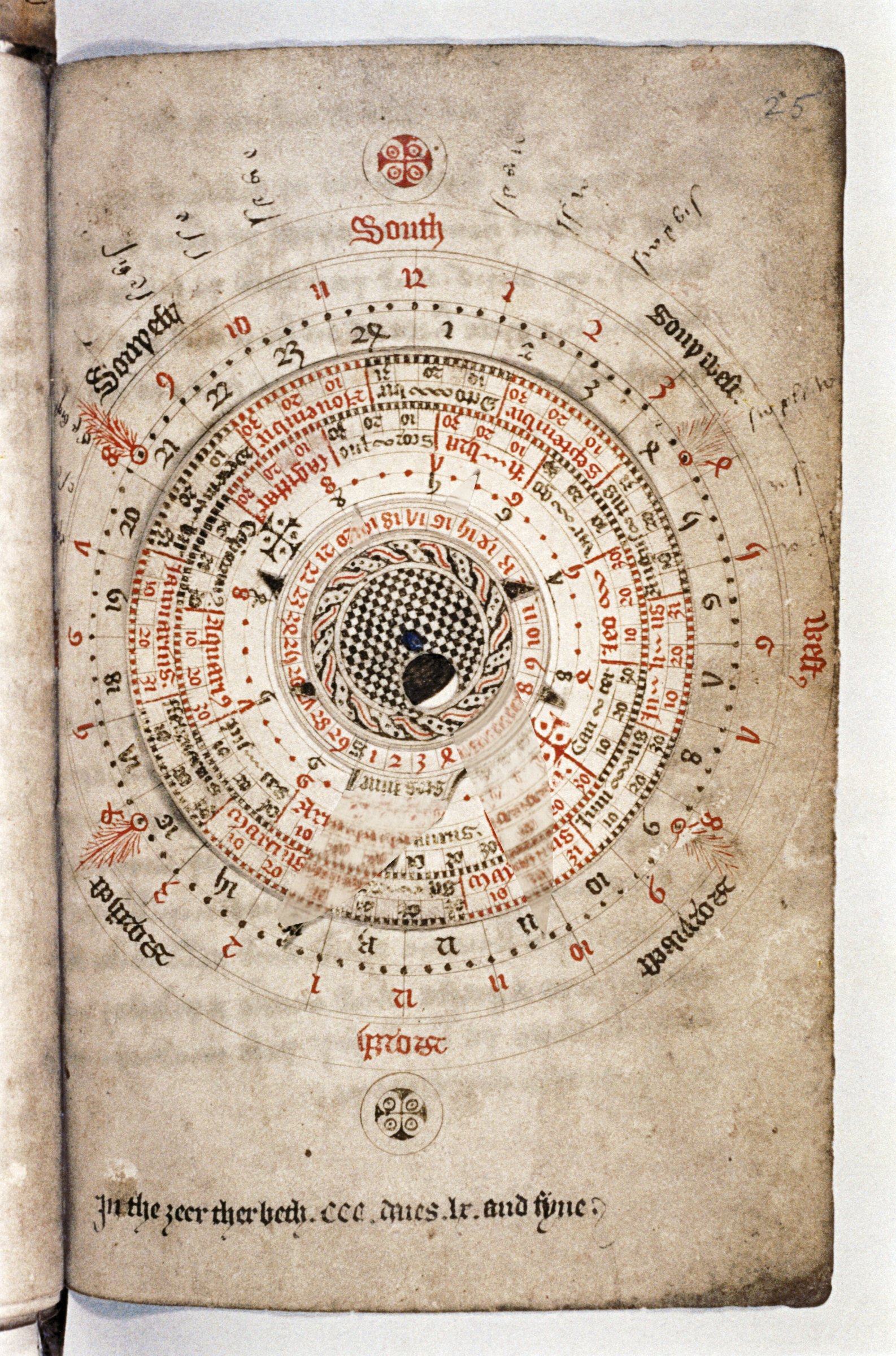
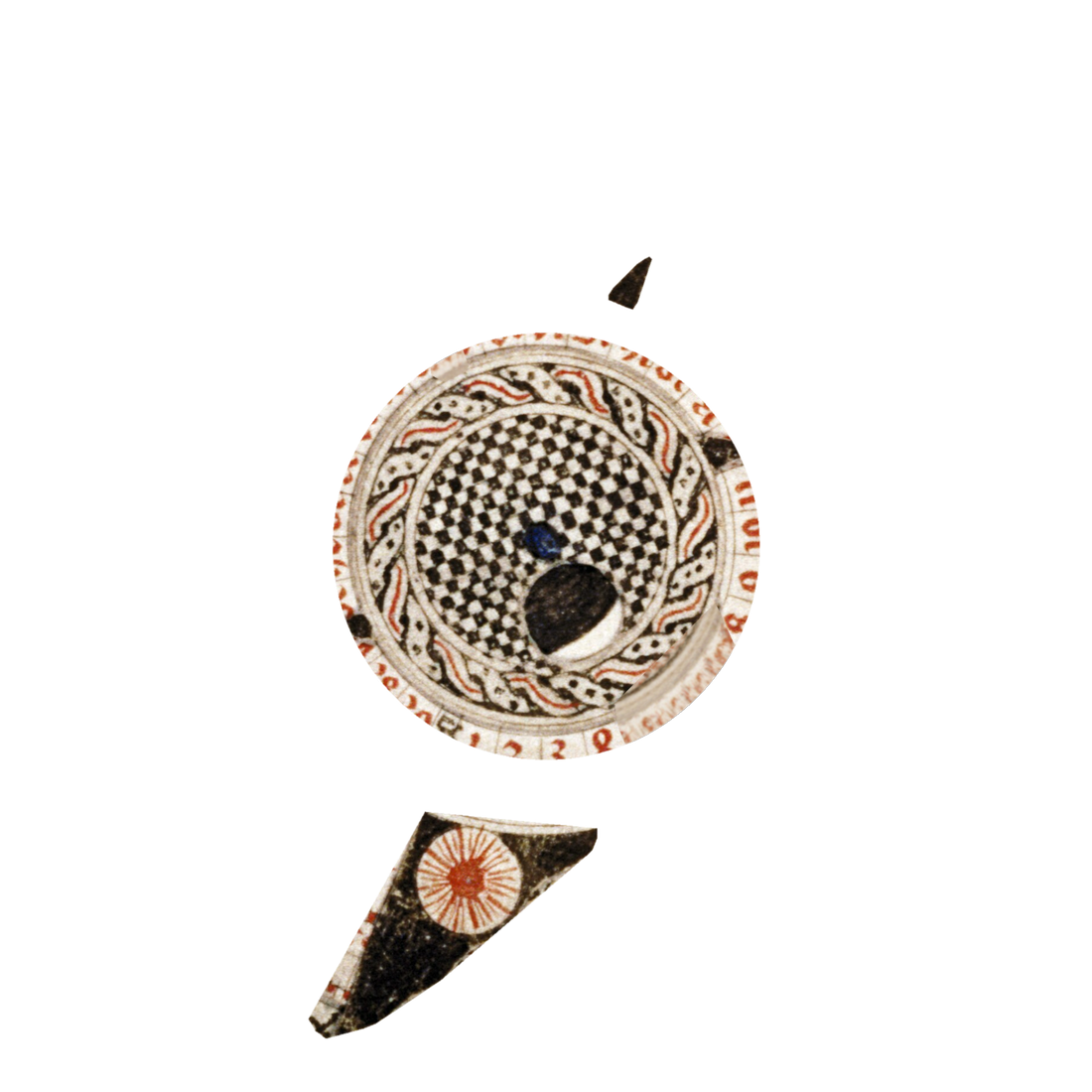
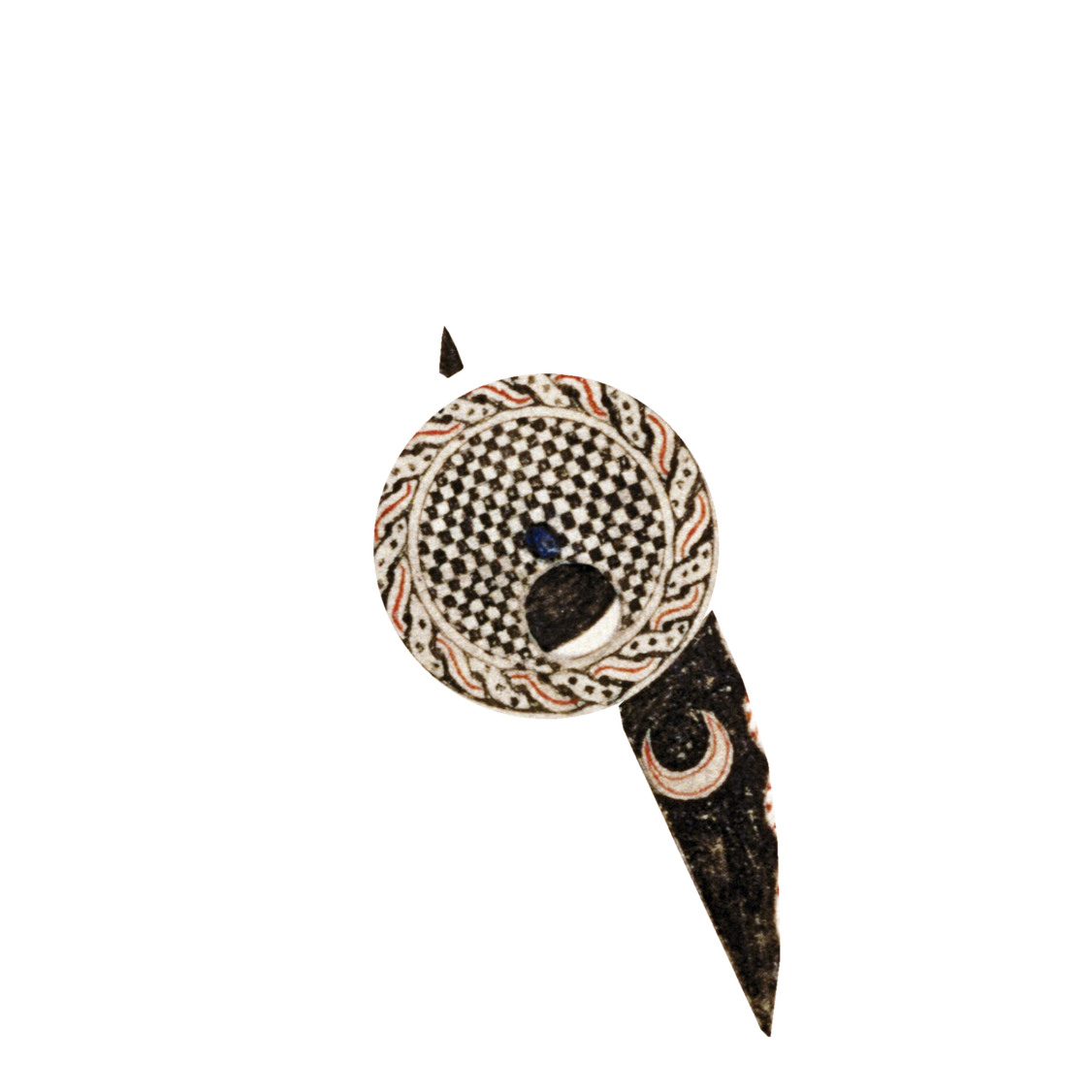
Drag a pointer, or the disc it belongs to, to turn it: the small centre is the moon disc, the ring of numerals around it the sun disc. The buttons do the same in steps; the keyboard turns the moon disc with the left and right arrows and the sun disc with up and down (hold shift for fifteen degrees).
Set the instrument
The sun disc
Pointer on the calendar: — · on the hour ring: — · turned 0° from the photograph
The moon disc
Age on the sun disc's ring: — · pointer on the calendar: — · turned 0°
On the hour ring: — · bearing — (the moon's pointer read on the compass)
How the readings are made: the calendar's twelve month lines were measured on the photograph itself, and the zodiac ring inside them, whose lines fall twelve to fourteen days into each month as the Julian calendar of 1386 requires, confirms the reading. The age ring is drawn on the sun disc and turns with the sun's pointer, its zero at the pointer, twenty-nine and a half days to the circle; the hour ring is taken as twenty-four hours from noon under South. Expect about a day's uncertainty. Set to today uses the Julian date, the manuscript's own calendar, and the moon's astronomical age. The structure follows Wymarc's deconstruction of this very page; none of it has yet been checked against Eisner's edition.
What the instrument does
The page beneath the discs carries, from the outside in: the compass, with South at the top as on an astrolabe, then Southwest, West, Northwest, North, Northeast, East and Southeast; the hours, in black for the twenty-four and in red for the twelve, noon at the top; the calendar, with the months named and their days marked in tens; inside it the zodiac, laid so that each date stands under the sun's place in the sky; and inside that two further scales, for the length of the day and the sun's height at noon. Then come the two discs: the sun disc, whose edge carries the moon's age from 1 to 29½, and the moon disc on top, with the black-and-white aperture for the phase and the small blue pin at the centre.
Each disc has a large pointer and a small one opposite it. The sun's pointer, painted with a red sun, is set to the day of the year on the calendar, and the zodiac beneath it then shows where the sun stands in the sky. The moon's pointer, with its crescent, is set to the moon's age on the ring at the edge of the sun disc, whose zero is the sun's pointer itself; the moon's pointer then shows where the moon stands in relation to the sun, and the aperture turns to show its phase. In the photograph the moon's pointer reads day four and a half and the aperture shows a thin crescent: the instrument was left set for a young moon. The hour ring beneath the moon's pointer gives the time at which the moon crosses the meridian, the moment on which the tide tables of the Kalendarium are built, and the compass points around the outside give the moon's bearing at that hour, which is how sailors of Lynn's day remembered the time of high water at their own port.
This description follows Richard Wymarc's deconstruction of this page (below) for the parts and the base scales, and the exhibition's own measurements for the calibration. It has not yet been checked against Eisner's edition; treat it as an introduction, not an edition.
In the ȝeer ther beth CCC daies lx and fyue — the rubric at the foot of the page: in the year there are three hundred and sixty-five days.
Sources and rights
Bodleian Library MS. Ashmole 370, fol. 25r
Photo: © Bodleian Libraries, University of Oxford. Digital Bodleian image 1bd5c214-b5f2-4ceb-86a7-809aeed652ba, from the 35 mm slide digitisation, served at 2643 × 4000 pixels; a local copy is kept here so the page does not depend on the Bodleian's servers. The full-resolution copy.
Terms of use: CC BY-NC 4.0, as stated in the image's IIIF manifest; the moving parts are an adaptation of the photograph under that licence, for non-commercial, educational use. See the Bodleian's terms.
Catalogue record
Catalogue of Western Medieval Manuscripts in Oxford Libraries: Nicholas of Lynn, Astronomical calendar, England, parchment.
Richard Wymarc (Timothy J. Mitchell), Binding the Heavens: Deconstructing the Lunar Volvelle
Class handout, version 2, July 2018 (CC BY-NC-ND 3.0), worked from this same Bodleian photograph. Its account of the base sheet, the sun disc with the age ring and the moon disc with the phase cutout is the structure this page follows; it also reproduces two English lunar volvelles of the same design, British Library Egerton 848, f. 22 (1490/1) and Sloane 4100.
Sigmund Eisner (ed.), The Kalendarium of Nicholas of Lynn
The Chaucer Library, University of Georgia Press, Athens GA, 1980. The edition and its introduction explain the tables and the instruments; the calibrated readings planned for this page will cite it by page.
How the moving parts were made, and what is reconstructed
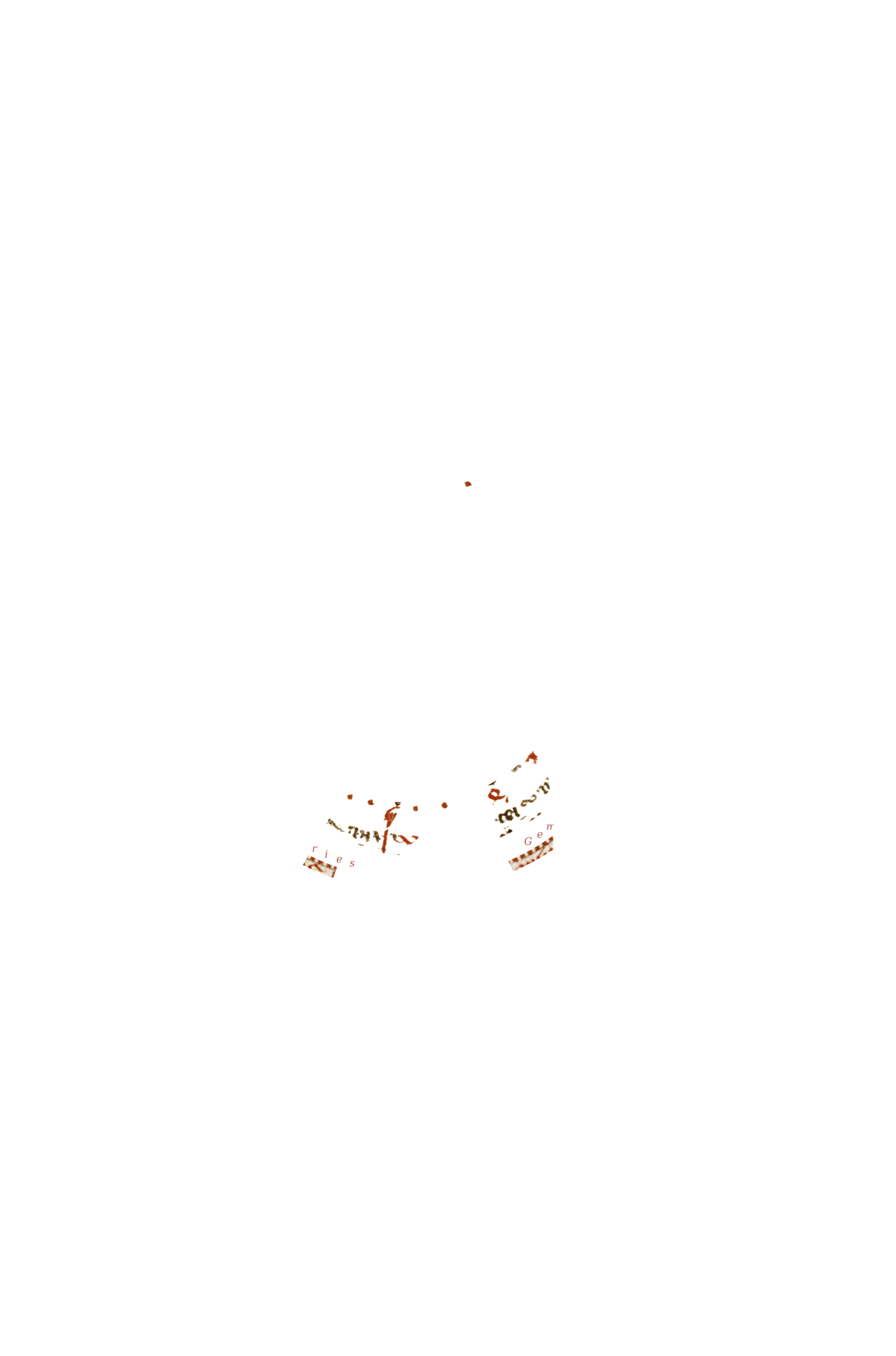
The sun disc (its age ring and pointer) and the moon disc (its centre and pointer) were cut from the photograph along their own outlines and pivot on the pin. Where the pointers lie in the photograph they hide the cells beneath. On this page those places are first filled with the texture of the same ring at other angles, and then, with the reconstruction switched on, the hidden cells are restored as far as the scribe's own work allows: the day cells of the month ring are copied from the same scribe's January cells, which share the 31-day layout; the numerals of the day-length and noon-altitude scales are copied from their mirror positions about the solstice line, where the same values stand; the two zodiac names that the pointers cover, Aries and Gemini, cannot be recovered and are supplied in a plainly modern italic hand in the same red; the small tips of the pointers over the hour rings are left blank. The outline control draws the borders of these areas. Nothing else in the photograph is altered, and Back to the photograph returns every part to where the photographer found it.