Paper Machines
Instruments that readers turned, made to turn again
Before print, and long after, some books were built to be worked as well as read: circles that turned on a pin, arms that pointed, windows that showed the moon's phase. This exhibition rebuilds them as working instruments, from the manuscripts and printed pages that carry them, and keeps the reader's own effort in view: what the machine supplies, what the user must know, and what it cannot tell.
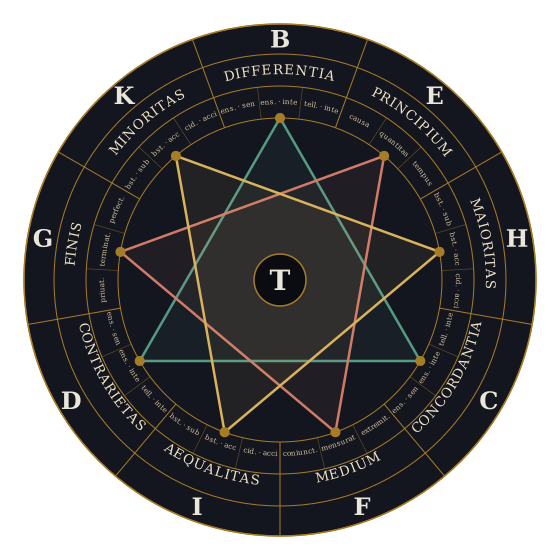
Ramon Llull, The Art of Finding
Ars brevis, 1308
Four figures and a turning wheel, redrawn after the manuscripts
Turn the three circles of the Fourth Figure, read the letters through the alphabet's six columns, follow Llull's own argument through the chamber BCD, and read all 139 questions of the Ars brevis in Latin and English.
Open the machine →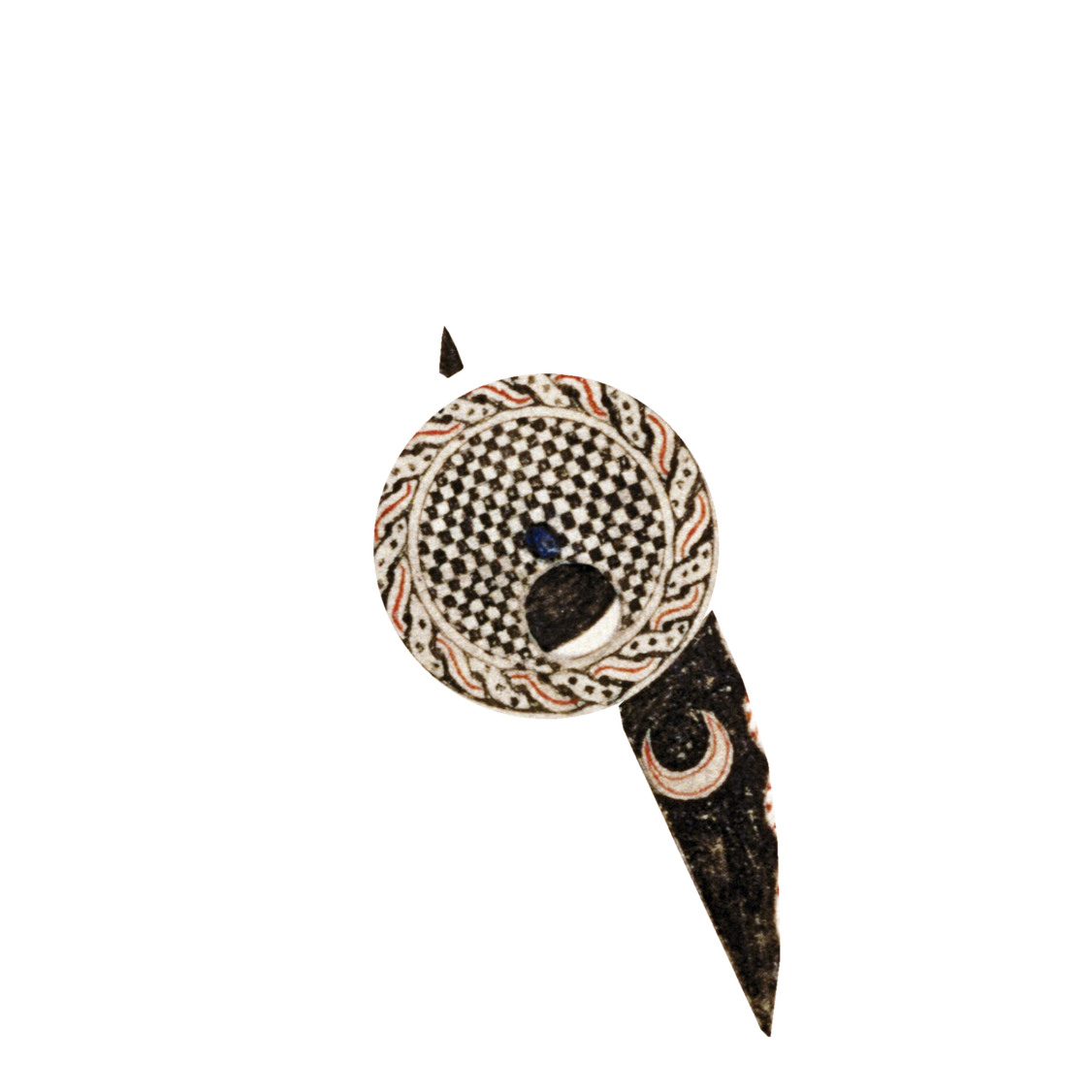
Nicholas of Lynn, The moon, the hours and the tides
Kalendarium, 1386; Bodleian MS. Ashmole 370, c. 1424
The manuscript's own volvelle, photographed and made to turn
Two discs on a pin in the Bodleian's photograph: set the sun's pointer to the day, the moon's pointer to the moon's age, and read the hour, the bearing and the phase, as the sailors of Lynn did.
Open the machine →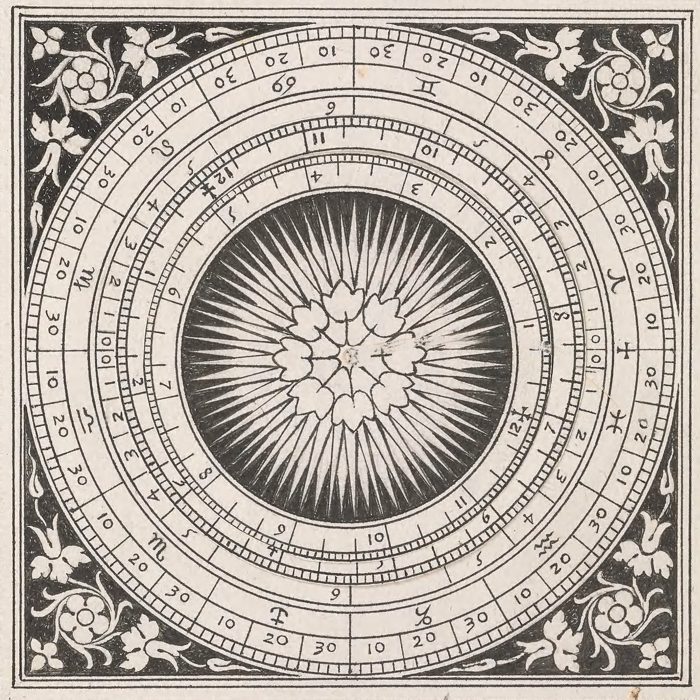
Regiomontanus, The true place of the moon
Kalendarium, Venice 1476
The printed book's own volvelle, photographed and made to turn
Two paper wheels and a thread in the Smithsonian's copy of the first printed calendar with instruments: set the wheels to the year's roots, count the day's lunar numbers from their heads, and read the moon's mean place on the zodiac and its correction on the ring Regiomontanus called the moon's equator.
Open the machine →
Hugh of Saint Victor, Addressable memory
Chronicle, c. 1130
A machine made of numbers, words and the reader's mind
Learn Hugh's line of numbers the way he taught it to his students, with the psalms' opening words hung on it; then have the words taken away, and the line, and see whether you can still reach any number directly, in either direction.
Open the machine →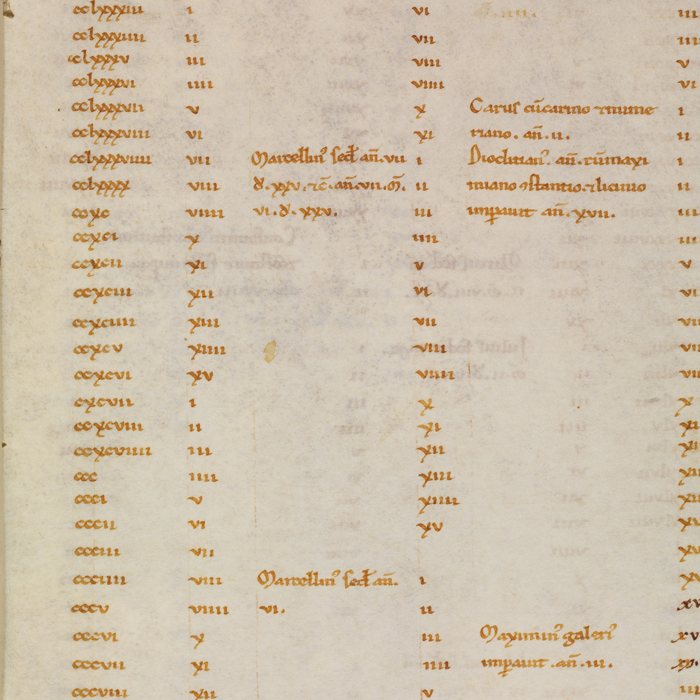
Hugh of Saint Victor, The line of years
Chronicle, c. 1130
Persons, places and times on one line, photographed and made to run
One row for every year from the Incarnation to Hugh's own day. Move the pointer along the photographed leaves and read off who held the see of Rome and the Empire, how far into each reign the year stands, and where Hugh's dates part from ours.
Open the machine →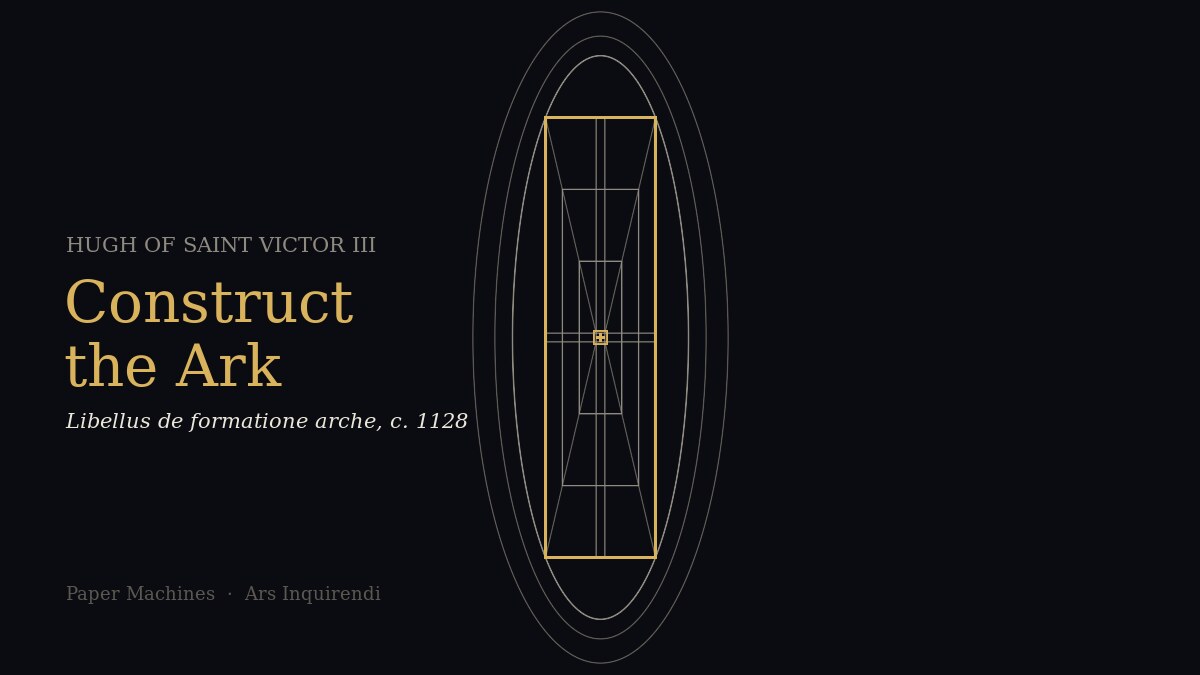
Hugh of Saint Victor III — Construct the Ark
Libellus de formatione arche, c. 1128
A lost painting's instructions, executed one sentence at a time
Hugh's text is not a description of a picture but the orders for drawing one, and the picture is lost. Read each passage and apply it: the drawing grows by exactly what those words warrant, and every line says whether Hugh states it, whether we infer it, or whether we had to choose.
Open the machine →Next on the bench
Candidates under consideration
The great wheels of Apian's Astronomicum Caesareum (1540); a sister copy of Nicholas of Lynn's Kalendarium; Harsdörffer's five-ring word wheel (1651); the tide almanac of Brouscon (1546); the eclipse wheel of Sacrobosco's De sphaera. Each will come with its sources and its limits stated.
How these machines are made
Where a manuscript's own instrument survives, as with Nicholas of Lynn's volvelle, the machine is the photograph itself: the moving parts are cut along their outlines and pivot on the pin, and anything the page cannot show is reconstructed in the open and can be switched off. Where the design is transmitted in many copies, as with Llull's figures, it is redrawn after the manuscripts and the early prints. Every page names its sources, states its rights, and separates what the historical author wrote from what the exhibition supplies.